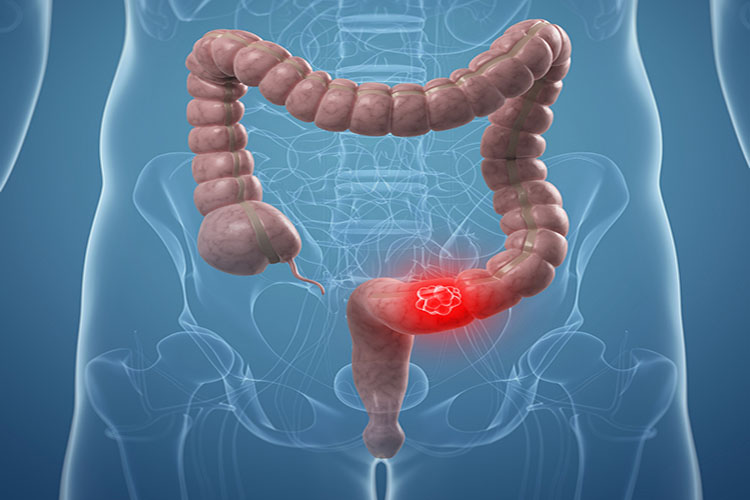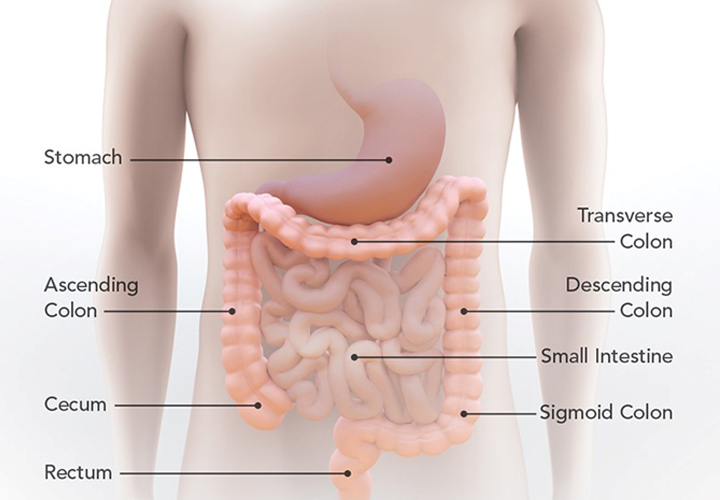
The large intestine has different parts: cecum, ascending colon, transverse colon, descending colon, sigmoid colon, rectum, anal canal, and anus. Colon is the terminal part of the gastrointestinal tract.
The prevalence of colon cancer is increasing, and colon cancer is the third killer cancer in the world.
Colon cancer occurs when the cells lining the inner surface of the colon overgrow and multiply abnormally. In most cases, cancer starts with a benign and non-cancerous “polyp”. It takes years for a polyp to turn into cancer, which is why tests available for colon cancer screening play a very important role in the early detection of colon cancer. If colon cancer is diagnosed at an early stage, it can be largely controlled and treated.
Colon cancer symptoms
- Abdominal pain
- Change in bowel habits: consistent diarrhea or constipation
- Blood in stool or bleeding from the anus
- Anemia and iron deficiency
- Black or dark-colored stool
- Unintentional weight loss

Colon cancer diagnosis
You should see a doctor if you have any of the symptoms above. Colonoscopy is the first step in colon cancer diagnosis. In a colonoscopy, inside the rectum and colon is seen, and a sample is taken.

After the diagnosis of colon cancer is confirmed by colonoscopy and biopsy, the next step is to determine the “stage” of cancer. Staging is a system used to describe the aggressiveness and spread of cancer. The stage of colon cancer is assigned based on:
- Physical examination and imaging methods such as CT scan or MRI of the abdomen, pelvis, and chest, chest radiography, etc. to determine the spread of cancer.
- The condition of the cancer cells in the sample taken during surgery.